Beyond Demand: Why Infrastructure Will Define Programmatic in 2026
This article was originally published by afaqs! on March 16, 2026
The programmatic ecosystem has never had more demand flowing through it. Yet for many publishers, revenue volatility persists. This paradox reflects a structural shift underway in digital advertising, access to demand is no longer the defining challenge.
Infrastructure execution is founded in 2021 and now approaching its five-year milestone, MagicBid was built on a simple belief that publishers deserve better control over how their inventory is monetized.
Today, the company operates as a trusted monetization and channel partner to industry leaders, including Google, PubMatic, InMobi, Magnite, and other global exchanges supporting 500+ publishers across Web, App, and CTV environments worldwide. With operational hubs in India, the UAE, and Singapore, and active markets across Europe, MENA, and Southeast Asia, MagicBid delivers monetization infrastructure supporting billions of ad impressions monthly.
Its ecosystem spans performance marketing, programmatic advertising, open auction environments, OpenRTB integrations, video, and CTV monetization, structured within a unified execution framework.
And after five years of scaling across diverse markets, one insight stands out:Integration is accessible. Precision is rare.
Growth Is Strong. Complexity Is Stronger.
According to IAB’s 2026 outlook, digital ad spend is projected to grow roughly 9–10% year-over-year, with AI-led buying strategies dominating allocation decisions. Meanwhile, CTV continues capturing a growing share of global video budgets.
On paper, demand momentum appears robust. In practice, yield volatility often originates not in the auction but in implementation.
Across billions of impressions analyzed across web, app, open auction, and OpenRTB environments, common revenue leakages stem from: Misconfigured ad units, Inconsistent size mappings, Broken or fragmented GPT integrations, Cache suppression conflicts, Device-level targeting errors, and Slow ad operations execution cycles.
These issues rarely make headlines. But in an AI-optimized auction system, even minor technical friction can distort bid density and compress effective CPMs.
Infrastructure hygiene has quietly become a primary growth lever.From Demand Stacking to System Structuring
In programmatic’s earlier growth phase, expansion meant adding more SSP integrations.
Today, most premium inventory is already connected.
The differentiator is no longer the number of integrations; it is the efficiency and clarity of the architecture behind them.
MagicBid’s monetization framework includes structured integrations with global demand leaders such as Google, PubMatic, InMobi, Magnite, and other major exchanges across display, video, CTV, and performance-driven ecosystems.
These partnerships are built on traffic quality, policy compliance, and transparent operational standards, and not simply volume.
Trust at scale requires discipline.
And discipline is becoming the currency of 2026.
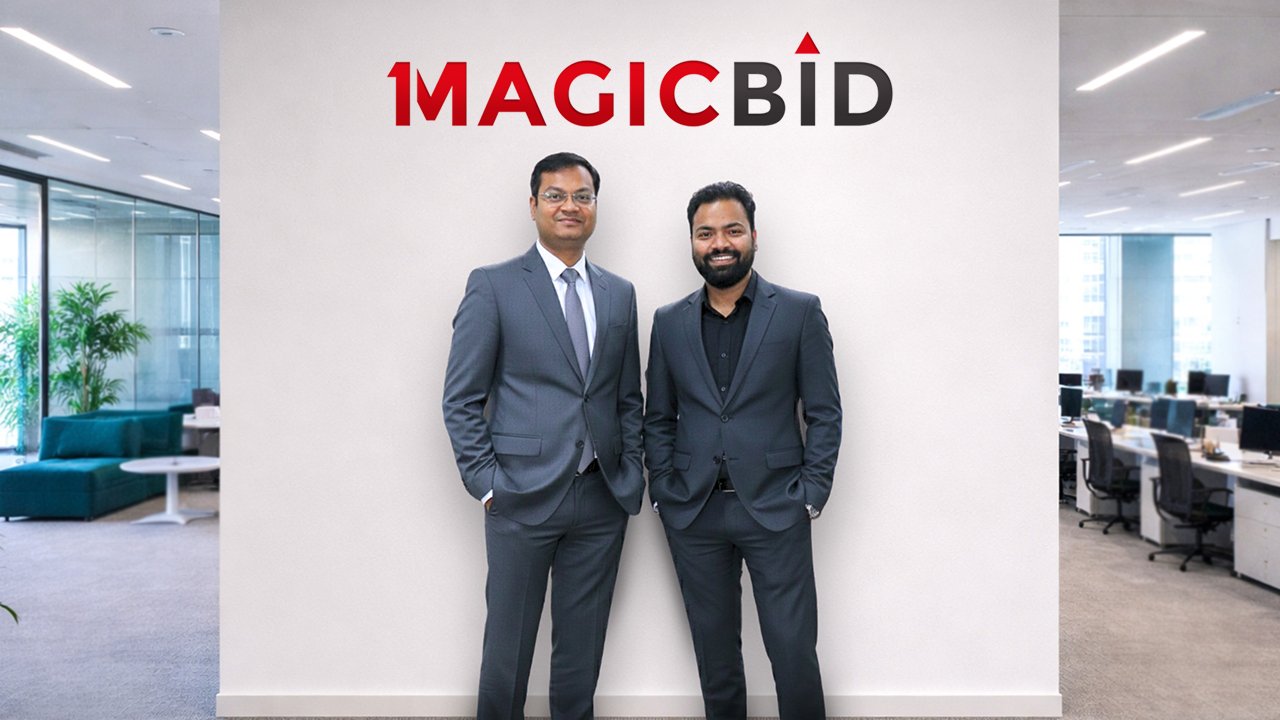
Vaibhav Srivastava, CEO of MagicBid, believes 2026 represents a shift from expansion to refinement:
“The early programmatic phase was about access, connecting publishers to demand. The next phase is about control. Publishers who understand their infrastructure, clean up execution gaps, and demand transparency will outperform those who simply add integrations. Revenue stability is becoming a function of readiness.”
Reducing Operational Friction at the CMS Layer
One overlooked complexity layer exists within WordPress-driven publishing environments.
Manual GPT insertions, theme-level edits, cache interference, and fragmented testing workflows often introduce instability into otherwise stable monetization setups.
To reduce this friction, MagicBid developed a structured Google Ad Manager integration plugin , enabling publishers to manage ad units directly within WordPress dashboards.
Through secure OAuth 2.0 authentication, publishers can configure banner, anchor, sticky, interstitial, rewarded, and custom formats without direct code manipulation. Responsive sizing, device-level targeting, and cache compatibility are managed within a controlled interface.
For publishers who want to understand how the implementation works in practice, MagicBid has also shared a short walkthrough explaining the plugin’s functionality and setup.
▶ Watch the overview here:
No personal data is collected or stored. OAuth tokens are generated through Google’s official consent flow and are stored locally within the publisher’s environment. No advertising data is transmitted beyond Google’s APIs.
It is not a disruption narrative. It is an execution narrative.
What 2026 Will Actually Reward
As programmatic matures, structural themes are becoming clearer.
1. Infrastructure Will Outweigh Integration Count
The marginal benefit of adding demand partners is shrinking. Greater yield stability now comes from refining server-side bidding logic, improving supply path efficiency, and reducing latency across auction environments.
2. AI Pricing Must Remain Explainable
AI is reshaping floor logic and bid allocation. But automation without transparency risks imbalance.
Publishers increasingly seek visibility into pricing mechanics, auction dynamics, and bid density patterns. The future belongs to AI-enabled systems that remain explainable and not opaque.
3. Privacy Is Now Architectural
Privacy is no longer a compliance overlay. It is foundational infrastructure.
From authentication to token storage to OpenRTB signaling, monetization systems must embed governance at their core.
Satyajit Nath, COO, adds:
“At scale, we’ve seen that small operational inconsistencies compound quickly. Whether it’s OpenRTB configurations, video demand alignment, or floor strategy execution, discipline in implementation drives yield protection. The industry is entering a maturity cycle where systems matter more than shortcuts.”
A Structural Reset
Digital advertising continues to expand globally. But the distribution of growth is becoming selective.
Across performance marketing, open auction, OpenRTB, video, and CTV environments, one pattern is clear:
Revenue will increasingly reward publishers who invest in structured systems, privacy-aligned tools, and a disciplined approach to execution.
The next phase of programmatic will not be louder. It will be more engineered.
And in 2026, competitive advantage will belong to those who treat monetization as infrastructure, not improvisation.